

What do investors need to know about a medical device manufacturing license in India?
If you plan to build or invest in a medical device unit in India, you must understand how the license works. A medical device manufacturing license india is not just a legal formality. It is your gateway to selling trusted, high-quality products to hospitals, clinics and distributors across the country.
This license is issued under India’s Medical Device Rules, 2017 by the Central Drugs Standard Control Organization (CDSCO) or state authorities. With the right preparation, the process is structured and predictable. For Indian investors, this clarity helps you plan capital, timelines and go-to-market strategy more confidently.
Why this license matters for Indian investors
For any medical device project, the license is the foundation. It allows you to legally manufacture, store and distribute devices in India. Without it, you cannot build a scalable, compliant business in this high-growth sector.
Here are the key benefits:
- Regulatory compliance: You can manufacture and market devices across India with full legal backing.
- Market access and trust: Hospitals and distributors strongly prefer licensed, compliant manufacturers.
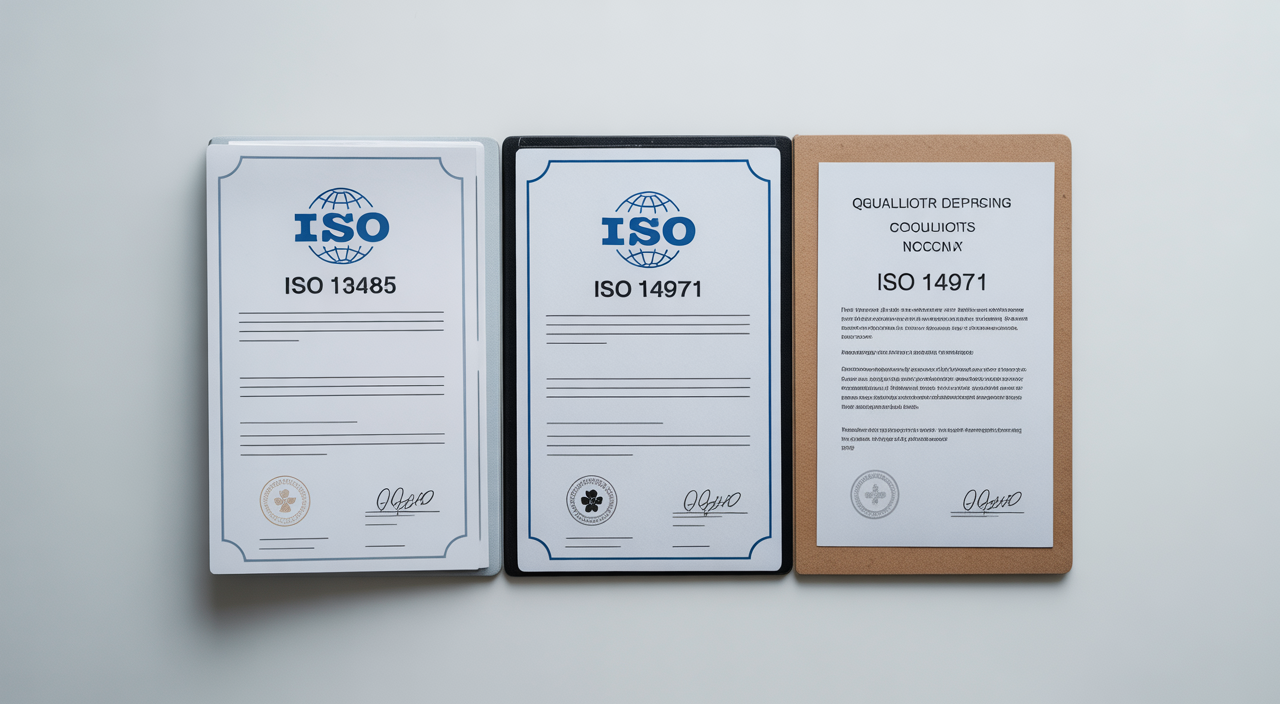
- Quality assurance: You align your systems with ISO 13485 (quality management) and ISO 14971 (risk management).
- Competitive edge: A license signals strong governance and safety, which is attractive to partners and global buyers.
- Long-term value: Licenses are perpetual in nature, as long as you pay retention fees every five years.
For investors, this means once the framework is in place, the asset can keep generating value over many years with limited regulatory friction.
Core documents you need before applying
The licensing process is document-driven. When your files are clear and complete, CDSCO reviews are smoother and faster. At a high level, you will need both company-level and device-level documents.
Mandatory documents include:
- Covering letter on company letterhead with brief project details
- Authorization proof for the applicant or authorized signatory
- Site Master File describing the manufacturing site, layout, utilities and controls
- Device Master File or technical dossier with design, intended use, materials and performance data
- Quality Management System certificate as per ISO 13485
- Risk management report based on ISO 14971
- Relevant test reports, such as electrical safety and software validation for software-based devices
- Undertaking on cybersecurity and software lifecycle, where applicable
Optional but useful documents:
- Approvals from other regulators (such as overseas certifications)
- Past inspection or audit reports, if any
- Clinical evaluation summaries or performance data from trials
For investors, a well-prepared dossier is a sign that the team understands regulatory expectations and can handle future audits with confidence.
Understanding risk classes and forms
Every medical device must be mapped to a risk class from A to D, based on CDSCO rules. Class A is low risk, and Class D is high risk. This risk class decides which forms you use and which authority will review your application.
Key form references:
- Manufacturing license for Class A and B devices: Forms MD-3 or MD-5
- Manufacturing license for Class C and D devices: Forms MD-7 or MD-9
- Import license for foreign-made devices: Apply via MD-14; license is granted through MD-15
Correct classification and correct forms are non-negotiable. It is wise to get this step validated by experts before submitting.
Step-by-step process to get the license
The route to a medical device manufacturing license in India follows a clear sequence. Here is a simple view that investors can track against project timelines:
- Classify the device: Confirm the risk class (A to D) using CDSCO rules and guidance documents.
- Prepare the application forms: Select the right form (MD-3, 5, 7 or 9) and fill it carefully.
- Compile the dossier: Put together the Site Master File, Device Master File, QMS and risk reports.
- Apply through the SUGAM portal: All submissions are made online through the CDSCO SUGAM system.
- Respond to queries: Regulators may ask questions or seek clarifications. Response quality here often decides timelines.
- Face inspection if required: CDSCO or the state regulator may visit the site to verify compliance.
- Receive the license: Once granted, you can start commercial manufacturing and market launch.
Timelines generally range between 3 and 6 months, depending on device complexity and how complete your documents are.
Costs investors should plan for
Budgeting correctly for regulatory work helps avoid surprises later. While exact fees can change, the typical cost heads look like this:
- Application processing fee: around INR 5,000 to 10,000, varying by device class
- Inspection fee, where required: around INR 10,000 to 25,000, depending on the number of shifts
- Retention fee: payable every five years, often in the range of INR 50,000 to 100,000 per license
- Professional and consultancy support: this can range widely based on scope and number of devices
Compared to plant and machinery, these costs are modest, but they directly influence speed-to-market and regulatory robustness.
Common mistakes you can avoid upfront
Many delays happen not because of technical issues, but simple process errors. As an investor or founder, you can guide your team to avoid these pitfalls:
- Expecting fixed approval timelines instead of planning for a 3 to 6 month window
- Using incorrect forms or missing fields in the forms
- Submitting unstructured, lengthy documents without clear indexing
- Overlooking cybersecurity and software lifecycle standards for software-driven devices
- Ignoring the five-year retention fee schedule and related budgeting
- For foreign manufacturers, missing the requirement for an Authorized Indian Representative with a valid wholesale license
Clean documentation and proactive planning turn the licensing journey into a smooth project milestone rather than a bottleneck.
How expert support strengthens your project
Specialist consultants can help with gap analysis, correct classification, form selection and communication with regulators. They also prepare you for inspections with mock audits and training on ISO 13485, ISO 14971 and related standards.
For investors, the value is clear: lower risk of rejection, predictable timelines and a plant that is audit-ready from day one. If you are preparing a funding or pitch deck, you can also align your regulatory roadmap using resources such as this guide on writing a business plan for an investor.
As your medical device unit grows, you may also look at related manufacturing opportunities, such as components and packaging. Insights from sectors like packaging and container manufacturing can help you think about vertical integration and supply chain resilience.
License validity and long-term compliance
One of the most attractive features for investors is that licenses under the Medical Device Rules, 2017 are perpetual. You do not need a fresh license every few years. However, retention fees must be paid every five years and your systems must remain compliant.
Regular internal audits, periodic training and timely updates of technical files help you maintain a healthy regulatory profile. This also supports expansion into exports and participation in government tenders.
FAQs on medical device manufacturing license in India
Q1: How long does it usually take to get a medical device manufacturing license in India?
A1: The process typically takes 3 to 6 months from a complete submission. The actual time depends on device risk class, document quality and how quickly queries from CDSCO or state regulators are addressed.
Q2: Is the license valid for life, or do I need to renew it?
A2: The license itself is perpetual. There is no expiry as long as you pay the prescribed retention fee every five years and continue to meet all regulatory and quality requirements.
Q3: Do foreign manufacturers need a local partner to apply?
A3: Yes. Foreign manufacturers need an Authorized Indian Representative who holds a valid drug wholesale license. This representative handles communication with CDSCO and supports compliance activities in India.
Q4: Which key standards should be covered in my application?
A4: At minimum, your application should reference ISO 13485 for quality management, ISO 14971 for risk management and relevant product or software standards along with applicable cybersecurity controls.

Roderick Smith is a writer, blogger, and business owner. He has been writing for over 5 years and his blog naouelmoha.net offers valuable information about the business, health, law, and the latest technology. Roderick lives in Nashville with his wife and three children.